




The Sahara Desert stretches across 9 million square kilometers. Most tourists see a fraction of it from the back of a camel during a rushed group tour. But walking these dunes with someone born here changes everything.
- The Difference Between Seeing and Understanding the Desert
- Erg Chigaga vs Merzouga: Choosing Your Desert Experience
- The Power of Customized Desert Tours
- Desert Yoga: Finding Stillness in Vast Emptiness
- What to Expect on Your First Desert Walk
- Morocco’s Growing Desert Tourism
- Frequently Asked Questions
- Your Desert Journey Starts With the Right Guide
You notice things you would miss on your own. The way sand shifts color as the sun moves. Which plants signal water beneath the surface. How to read the wind patterns that reshape the landscape overnight.
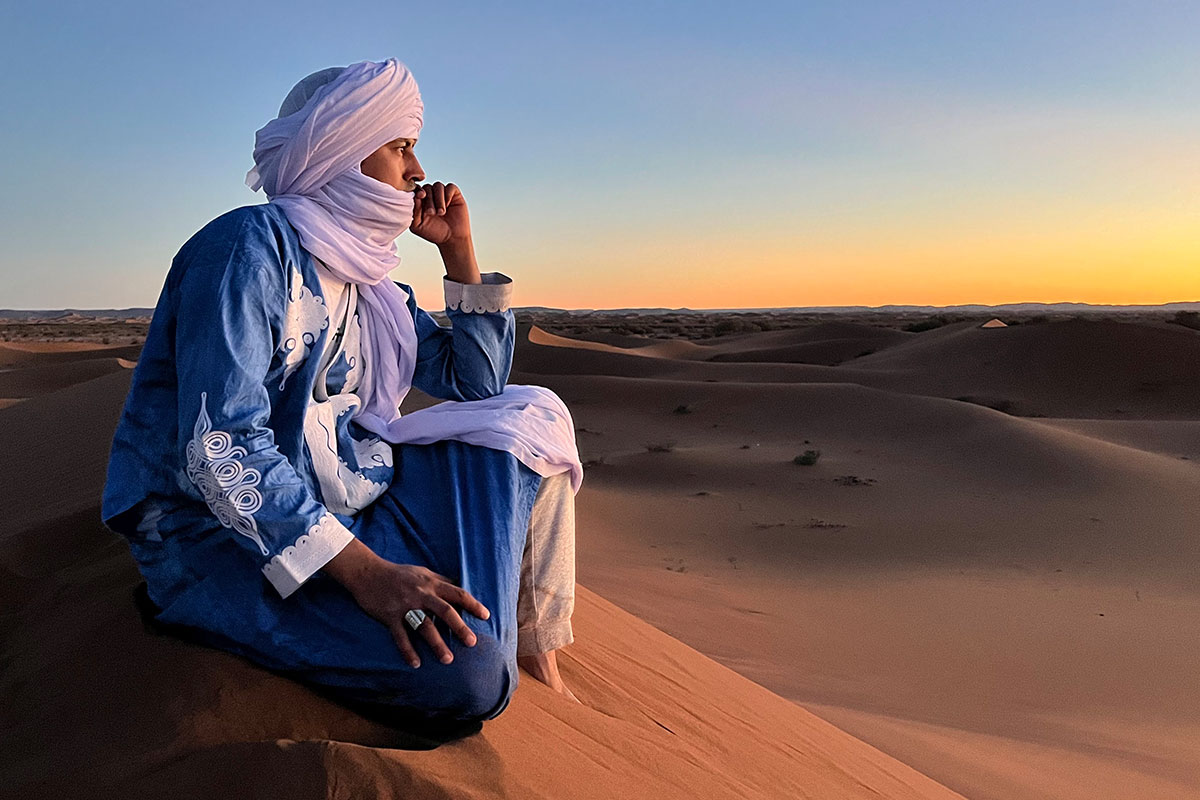
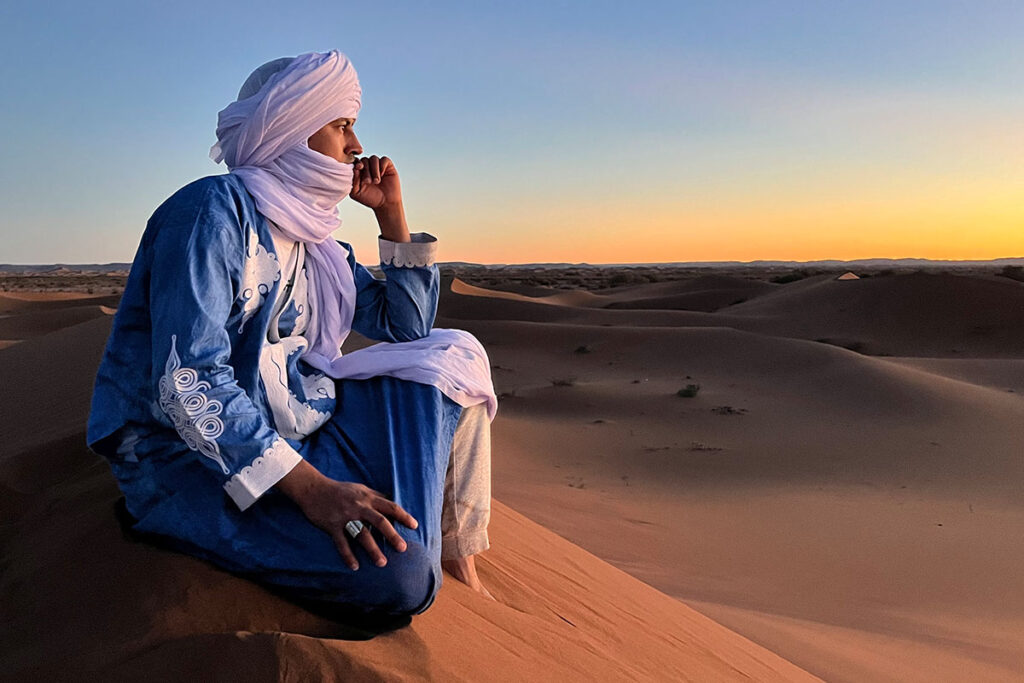
Ali, owner of Desert Chigaga Tours, grew up as a Sahrawi nomad. His family moved between Algeria and Morocco before settling in Mhamid village. He knows this desert the way you know your neighborhood. Every dune. Every hidden valley. Every seasonal water source.
This matters more than you think when you plan your Morocco desert adventure.
The Difference Between Seeing and Understanding the Desert
Group tours follow set routes. You see the same sunset spots as hundreds of other visitors. You take similar photos. You leave with memories but little real connection to the place.
Discovering the Moroccan desert with a Sahrawi guide transforms the experience.
Ali reads the desert like a book. He points out tracks in the sand and tells you which animal passed by and when. He explains why certain plants grow in clusters and others stand alone. He navigates the desert, knowing the stable contours of the dunes so well that he can orient himself even in a sandstorm, without need of map, stars, or GPS.
What You Learn on the Adventure
The desert teaches patience. Silence. Respect for water and shade. These lessons hit different when your guide learned them as a child, not from a textbook.
You discover that the Sahara supports life in unexpected places. Beetles that collect morning dew. Birds that travel hundreds of kilometers to nest in specific locations. Plants with root systems that reach 30 meters down to find moisture.
Traditional guides help visitors identify species and behaviors that standard tours overlook. They share knowledge passed down through generations of nomadic living.
The Cultural Context You Cannot Get Elsewhere
Ali shares stories his grandparents told him. How nomadic families survived droughts. Why certain locations hold spiritual significance. What changed when borders were drawn across traditional migration routes and why the unbreakable rule of hospitality; of sharing is the most vital life-saving practice in the desert.
This context matters. You understand why Moroccan desert culture values hospitality so intensely. Why tea ceremonies follow specific rituals. Why silence carries as much meaning as conversation.
Erg Chigaga vs Merzouga: Choosing Your Desert Experience
Merzouga, home to Erg Chebbi dunes, attracts most tourists with easier access and higher dunes reaching up to 150 meters. Infrastructure makes the journey simple. You find dozens of tour operators and established camps.
Erg Chigaga offers something different. Fewer visitors. Wilder landscape. Authentic isolation.
Desert Chigaga Tours specializes in this less touristy region while maintaining expertise in Merzouga for clients who prefer that area. The choice depends on what you want from your trip.
Why Erg Chigaga Appeals to Serious Desert Seekers
You need a 4×4 vehicle to reach Erg Chigaga, located about 56 kilometers southwest of M’Hamid El Ghizlane. The journey takes you across dried lake beds, rocky plateaus, and shifting sands. This remoteness keeps crowds away.
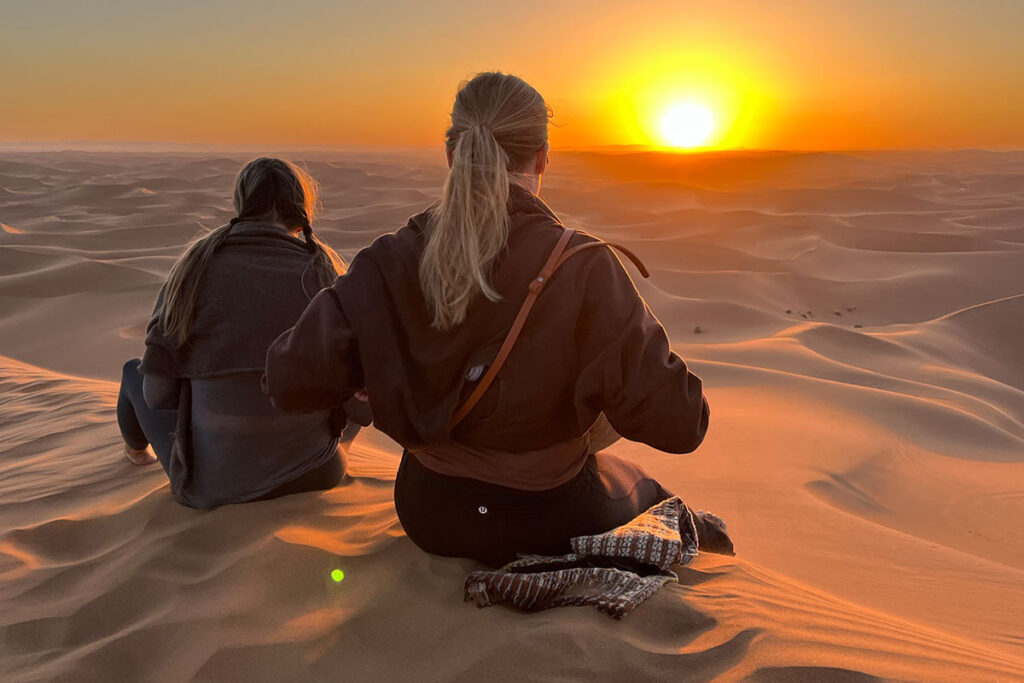
The dunes here reach over 50 meters high. From the top of Erg Chigaga dunes, you see the desert dunes stretching endlessly until the horizon … just sand dune after sand dune … quite an amazing view! You camp under stars so bright they cast shadows. You hear nothing but wind and silence.
Erg Chigaga’s remote charm and vast, uncrowded expanses appeal to adventurers seeking true desert solitude. The area requires commitment with longer travel times, but rewards visitors with an unforgettable escape into Morocco’s Sahara.
When Merzouga Makes More Sense
Merzouga suits travelers with limited time. You reach the dunes roughly 560 km from Marrakech, about a 9-hour drive on paved roads. Facilities offer more comfort options. Tours run year round with reliable logistics.
Desert Chigaga Tours operates in both regions. Ali’s team customizes itineraries based on your schedule, fitness level, and what you want to experience. Some clients combine both areas in longer trips.
The Power of Customized Desert Tours
Standard group tours follow rigid schedules. You wake when the itinerary says. You eat what gets served to 30 people. You leave when the bus departs.
Customized tours adapt to you.
Want to spend extra time photographing dunes at dawn? Done. Prefer hiking to camel riding? The route adjusts. Need vegetarian or specific dietary options? Your meals reflect that.
This flexibility extends beyond comfort. It affects what you learn and how deeply you connect with the environment.
How Customization Creates Authentic Experiences
Desert Chigaga Tours builds each itinerary collaboratively. You discuss interests, physical abilities, and goals. The team designs a route that matches your needs while introducing elements you might not know to request.
First time in the desert? Ali suggests experiences that build your understanding gradually. Returning visitor? He takes you to locations off standard routes.
The approach respects both nature and travelers. Mainly private tours to minimize environmental impact. Guides share knowledge about protecting fragile ecosystems.
Environmental Respect in Desert Tourism
Mass tourism damages delicate desert environments. Vehicle tracks scar landscapes for decades. Litter accumulates in remote areas. Popular campsites show erosion from overuse. Desert Chigaga Tours prioritizes environmental protection.
Ali grew up watching the desert change. He sees the responsibility in sharing it with visitors. The goal is showing you beauty while preserving it for future generations.
Desert Yoga: Finding Stillness in Vast Emptiness
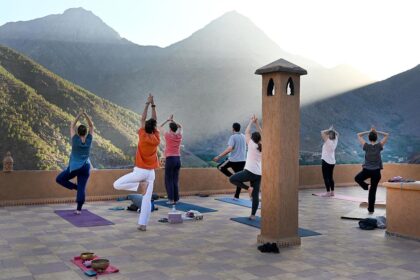
Yoga studios feel confined after you practice in the Sahara. No walls. No ceiling. Just sand, sky, and silence extending to every horizon.
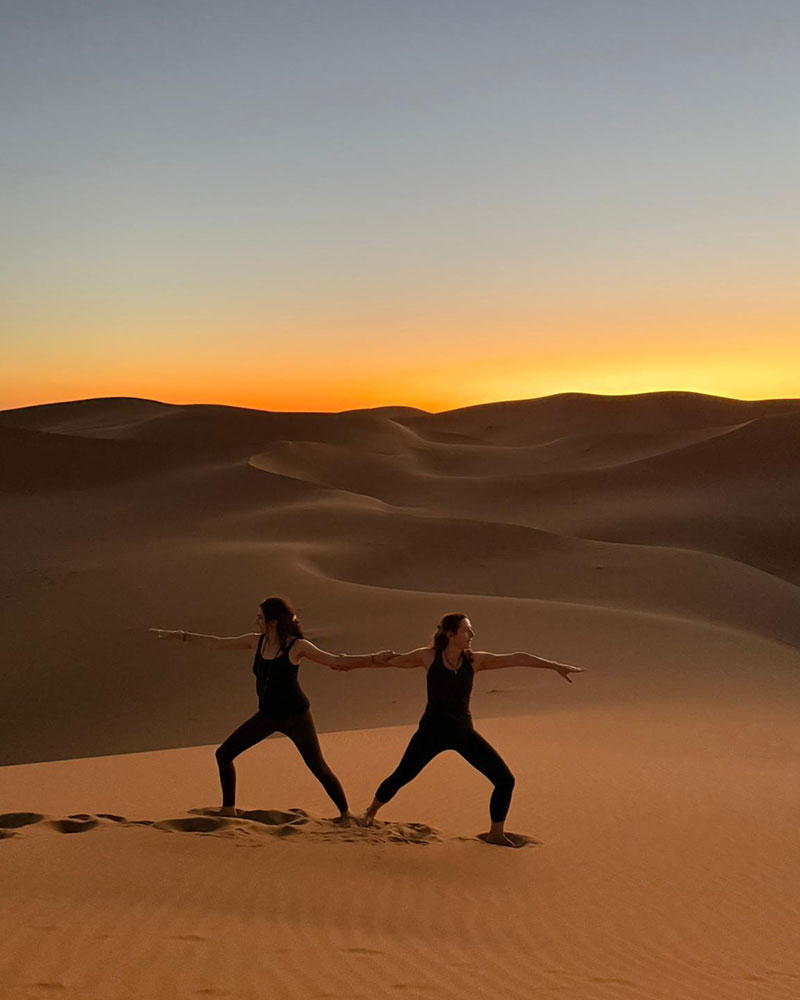
Desert Chigaga Tours runs specialized yoga retreats each fall. The combination works naturally. Desert landscapes encourage internal quiet. The vastness helps you let go of mental clutter. As night falls, an evening yoga session under the Milky Way becomes a once-in-a-lifetime experience; stars slowly filling the sky, one by one, as you breathe, move, and watch the universe open above you.
Why the Desert Transforms Your Practice
You breathe differently in the desert. Air carries less moisture. Temperatures range from 25°C in winter to 45°C in summer, with the best visiting months between October and April. Your body adjusts, and your practice deepens.
Morning sessions catch the cool hours. You salute the sun as it crests the dunes. The light changes from pink to gold to white. Your movements synchronize with natural rhythms impossible to replicate indoors. You are surrounded by silence and feel the power of nature
Evening practices bring different energy. Heat fades. Stars emerge. You hold poses under constellations that guided nomads for centuries.
What to Expect on Your First Desert Walk
The desert looks simple from a distance: sand and sky. But complexity emerges with each step.
You notice temperature variations; shaded spots feel 10 degrees cooler; south facing slopes absorb more heat; Wind patterns shift throughout the day.
Your guide points out signs you would miss. Fox prints near a shrub. The way sand accumulates around obstacles. How to identify different dune types by their shape.
Physical Preparation
Walking on sandy ground requires a different level of effort compared to walking on hard paths. You will be working your calves much harder. It becomes essential to maintain your balance on the sides of high dunes. You will tire easily.
No athletic training is required, but some moderate fitness or some walking would be useful in preparation of the trip. Desert Chigaga Tours adjusts pace and distance to match your abilities and wishes.
Hydration matters more than in other environments. You lose water through sweat, breathing dry air, and simple exposure. Guides monitor your intake and ensure you stay hydrated.
Mental Adjustments
The desert challenges your sense of scale and time. Distances deceive. What looks like a 15 minute walk takes 45 minutes. Dunes that appear small reach 50 meters high.
Silence feels uncomfortable at first. You notice your thoughts more clearly without background noise. This discomfort transforms into clarity after a day or two.
Your phone becomes useless beyond photos. No signal. No navigation apps. You learn that time has no meaning in the desert and you start breaking from routines and connecting with the environment. You learn that you are as big as sand corn in the desert. You rely on your guide and your own senses. This disconnection from technology reconnects you to immediate experience and to yourself.
Morocco’s Growing Desert Tourism
Morocco welcomed 19.8 million international visitors in 2025, representing a 14% increase from 2024. The country now stands as the most visited destination in Africa.
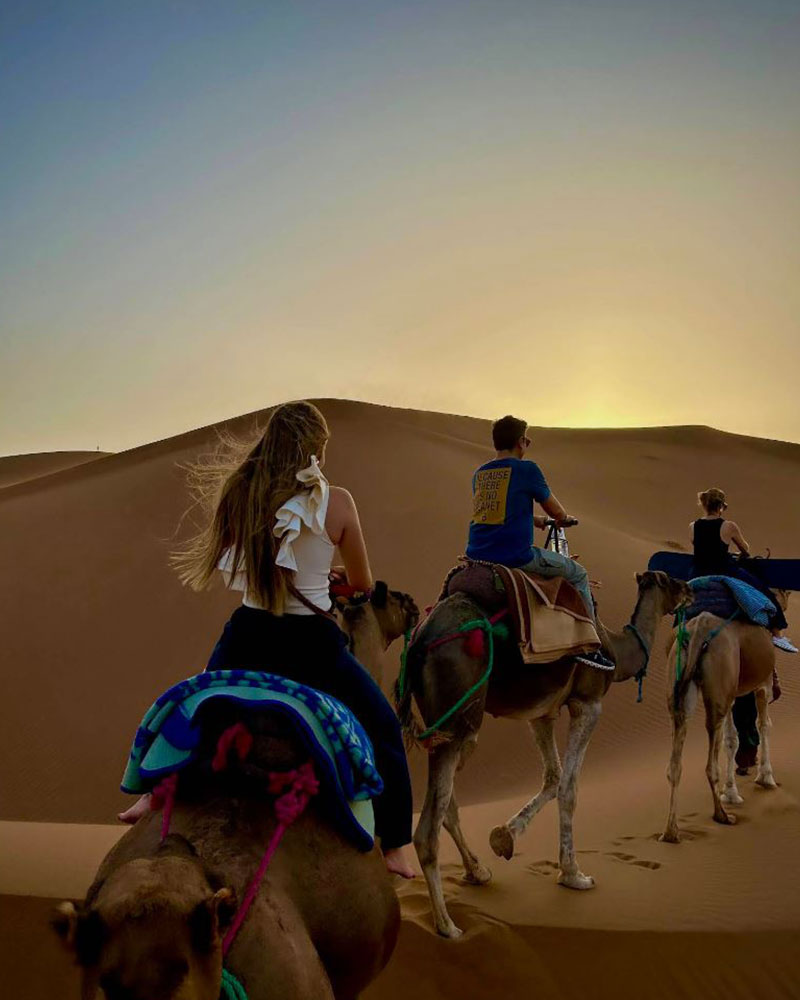
The Sahara remains a playground for sandboarding, quad biking, and desert treks, drawing visitors from around the world. This growth reflects Morocco’s investment in tourism infrastructure and cultural preservation.
Tourism contributes approximately 7% of Morocco’s GDP and generates around two million direct and indirect jobs. The sector plays a crucial role in the country’s economy.
Choosing the Right Desert Tour Operator
Morocco offers hundreds of desert tour companies. Prices and promises vary wildly. You need to distinguish authentic experiences from tourist traps.
Ask specific questions. Where was your guide born? How long have they worked in the desert? What size are your groups? How do you minimize environmental impact?
Red Flags to Watch For
Extremely low prices mean cut corners. Guides lack training. Equipment fails. Safety becomes questionable.
Huge groups dilute the experience. You spend more time managing logistics than exploring. Personal interactions with guides become impossible.
Vague itineraries hide poor planning. Reputable operators provide detailed schedules. They have backup plans for weather changes or emergencies.
Why Local Expertise Matters
Sahrawi guides bring cultural and practical knowledge that outside operators cannot match. They know local families who still practice traditional nomadic lifestyles. They access areas tourists never see. They share stories rooted in personal history, not rehearsed scripts.
Desert Chigaga Tours centers on this authentic expertise. Ali’s background as a nomad who settled in Mhamid gives him unique perspective. He bridges traditional knowledge with modern visitor needs.
The company maintains relationships throughout Morocco’s desert regions. This network ensures reliable logistics and authentic cultural exchanges.
Frequently Asked Questions
What is the best time to visit the Sahara Desert in Morocco?
October through April offers the most comfortable temperatures, with October and November being perfect months. Winter months bring cool evenings & mornings and mild days ideal for discovering the desert . Summer heat exceeds 45°C and makes extended outdoor activity dangerous. Fall combines pleasant weather with fewer tourists.
How physically demanding is a desert walk?
Walking in sand requires more effort than flat trails, but tours adjust to your fitness level. Most people with moderate health handle the experience fine. You take frequent breaks and guides modify routes based on your energy. Custom tours offer flexibility that standard packages cannot match.
What makes Erg Chigaga different from Merzouga?
Erg Chigaga requires 4×4 access and offers remote wilderness with vast, uncrowded expanses, while Erg Chebbi near Merzouga provides easier access and higher dunes. Both have spectacular desert landscapes. Your choice depends on how much isolation you want and how much time you have available.
Why choose a Sahrawi guide for desert tours?
Sahrawi people grew up in the desert as nomads. They read landscapes, weather, and natural signs that tourists miss. Their cultural knowledge adds depth beyond simple sightseeing. They share personal stories and traditional practices that outside guides learn secondhand at best.
Can you customize desert tours for specific interests?
Desert Chigaga Tours builds itineraries collaboratively with each client. You discuss your interests, physical abilities, and goals. The team designs routes that match your needs while suggesting experiences you might not know exist. Photography, cultural immersion, yoga, wildlife observation, or simple relaxation all shape different tour structures.
Your Desert Journey Starts With the Right Guide
The Sahara reveals itself slowly. You cannot force understanding or rush connection. You need time, attention, and someone who knows the land intimately.
Discovering these dunes with Ali means seeing through eyes trained from childhood. You learn to read the desert’s language. You understand its rhythms and respect its power.
This transforms tourism into something deeper. You do not just visit the Sahara. You begin to comprehend it.
Group tours show you postcard views. Customized experiences with local experts give you authentic encounters with one of Earth’s most extreme and beautiful environments.
The difference stays with you long after sand falls from your shoes.
Your choice of guide determines everything. Pick someone who calls this place home. Pick someone whose family has survived and thrived here for generations. Pick someone who protects what they share.
The desert waits. It has waited millions of years. It will show you wonders if you approach with respect and the right companion.
Start planning your authentic Sahara experience with guides who know every dune, every star, every story written in the sand.