



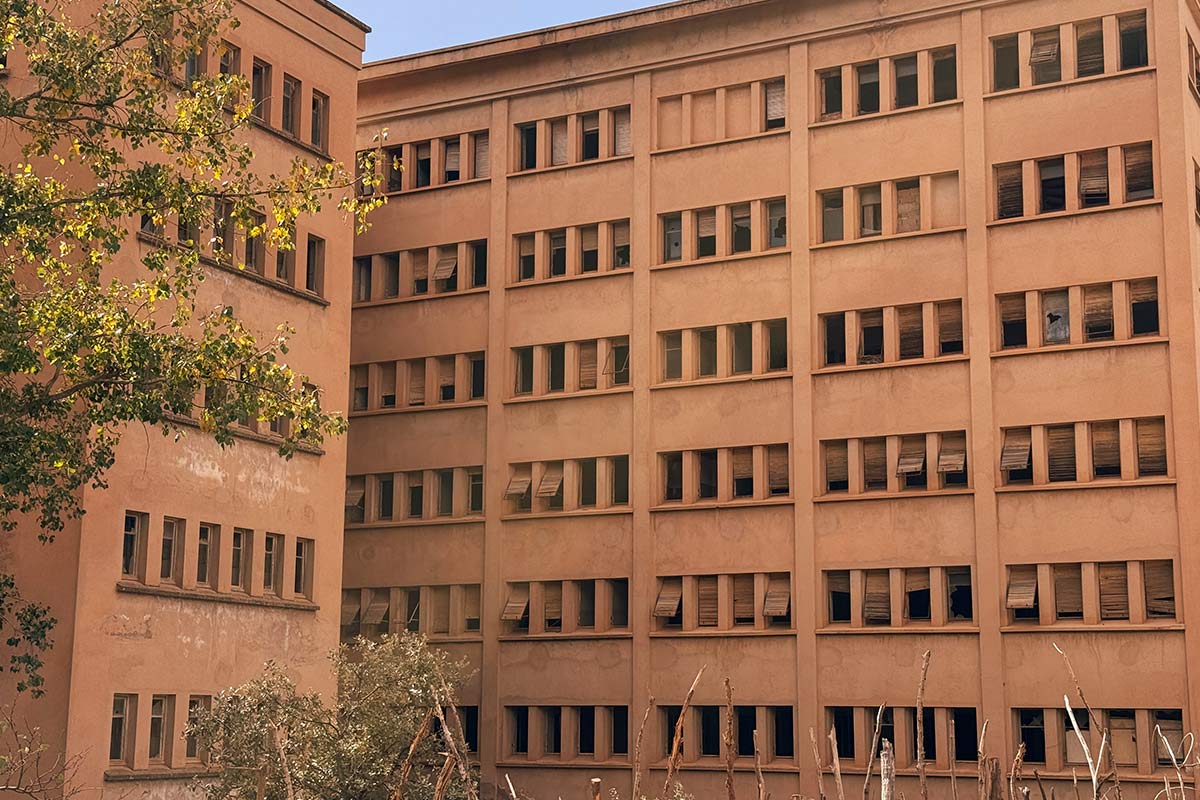
Somewhere between the cedar forests and misty mountains near Azrou, the abandoned sanatorium of Bensmim stands like a building that froze in time.
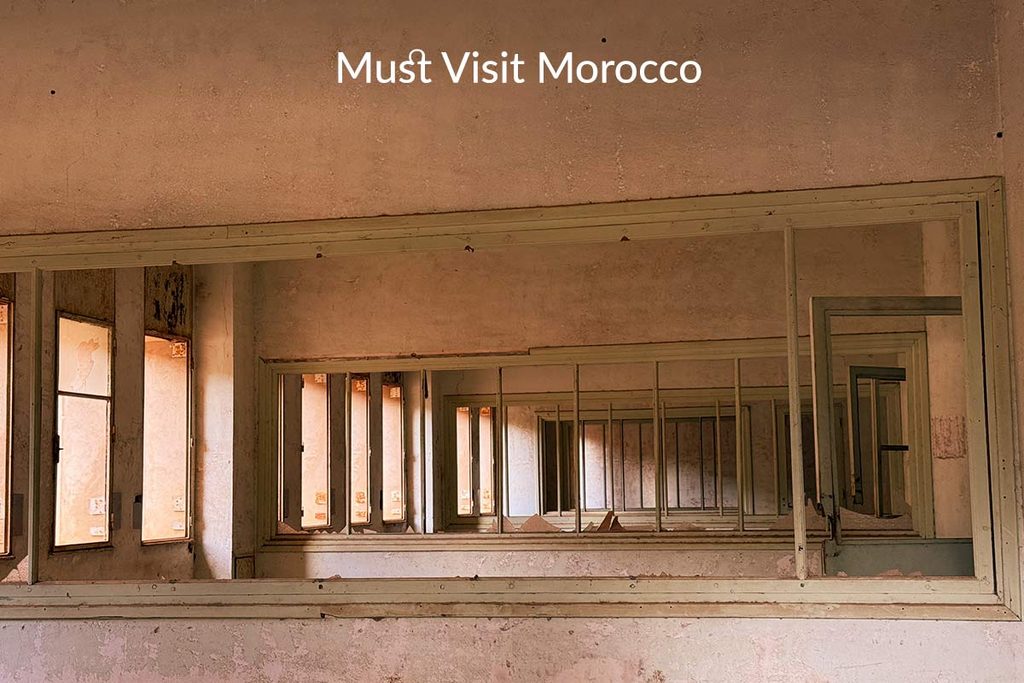
Its long corridors, shattered windows, and empty rooms have earned it a reputation as one of Morocco’s most unsettling places. Nature slowly reclaims its walls, while stories of strange encounters and restless spirits surround the decaying structure.
But before Bensmim became a destination for urban explorers and lovers of the paranormal, it was built for a very different purpose: to save lives.
And the history behind its abandoned walls is almost as haunting as the legends themselves.
The History of Bensmim Sanatorium
Construction of the sanatorium began in 1945, during the French Protectorate, and the institution officially opened in 1955. Its creation was driven by the urgent need to treat tuberculosis, a disease that caused widespread suffering in Morocco at that unfortunate time.
The location was carefully chosen. Situated high in the Middle Atlas, the area offered fresh, crisp mountain air and a peaceful environment, conditions then considered beneficial for patients recovering from pulmonary diseases.
The enormous building stretched approximately 185 metres and accommodated hundreds of patients. It was among Morocco’s most ambitious medical facilities of its time, equipped with treatment rooms, communal spaces, and facilities designed to make lengthy stays more bearable.
Patients could spend months or even years there. Beyond medical treatment, the sanatorium offered a cinema, a theatre, libraries, and recreational activities. It even included a mosque, a chapel, and a synagogue, reflecting the diverse communities it served.
For the people who lived there, Bensmim was not simply a hospital; it was a temporary world of its own, filled with illness, uncertainty, friendships, and the hope of returning home.
Then, in 1975, it closed its doors.
As tuberculosis treatment advanced and the expense of maintaining the vast complex became increasingly difficult to justify, the sanatorium fell into disuse. Its equipment and furnishings were gradually removed or stolen, leaving behind a hollow reminder of what it once was.
Decades later, the building sadly remains abandoned, its future uncertain.
The Legends That Haunt Its Corridors
Today, Bensmim is better known for its eerie atmosphere than its medical achievements. Its enormous size, isolation, and decaying interiors have made it fertile ground for spoooooky supernatural stories.
Ghosts of the former patients
One of the most persistent themes surrounding abandoned hospitals is the idea that the suffering experienced within their walls never truly disappears and that ghosts dwell in places where death and negativity were once present.
At Bensmim, stories of ghostly apparitions, unexplained noises, and doors slamming in empty corridors contribute to its haunted reputation. Visitors and urban explorers have described the unsettling feeling of wandering through a place that once held so many lives, only to find it almost entirely silent.
Whether these accounts reflect genuine personal experiences, the effects of an unfamiliar environment, or stories growing with each retelling, they remain part of the site’s modern folklore.
It is easy to understand why. A hospital abandoned with rooms still bearing traces of its former purpose can stir the imagination in ways other buildings can´t.
The rumour of a political conspiracy
Perhaps the most intriguing story associated with Bensmim has little to do with ghosts and a lot to do with the politics at that time.
A rumour claims that the sanatorium was connected to secret political plotting against King Hassan II, Morocco’s former monarch. Some versions suggest that conspirators used the isolated building as a secret meeting place.
However, this claim is not established historical fact, and a verified link between the alleged conspiracy and the sanatorium’s closure has not been demonstrated.
The story nevertheless adds another layer of mystery to an already unusual place. In a building hidden among forests, far from the noise of major cities, it is easy to imagine secret meetings taking place behind closed doors.
Why Bensmim Still Haunts Us to This Day?
Perhaps what makes Bensmim so unsettling is not the possibility of ghosts, but the contrast between what the building once represented and what it has become over time.
Once, its rooms held patients waiting for recovery. Its libraries and cinema offered moments of escape from illness. Its corridors carried the footsteps of doctors, nurses, families, and people hoping to return to their lives.
Today, radio silence occupies those same spaces.
The sanatorium is a reminder of how quickly a place built around human suffering and hope can become forgotten. Its haunting atmosphere comes not only from the stories told about it, but from the history that remains embedded in its walls, the history that none of us got to see, so it remains forever a mystery.
Bensmim deserves more than its reputation as a haunted destination, in my opinion. It is also an important piece of Morocco’s medical and architectural history, one that continues to wait for the restoration and recognition it deserves.
And perhaps that is the most haunting part of all: long after the last patients left, the building remains, holding the echoes of a world that once existed within it.
Some places are haunted by the dead, while others are haunted by everything the living have left behind.