



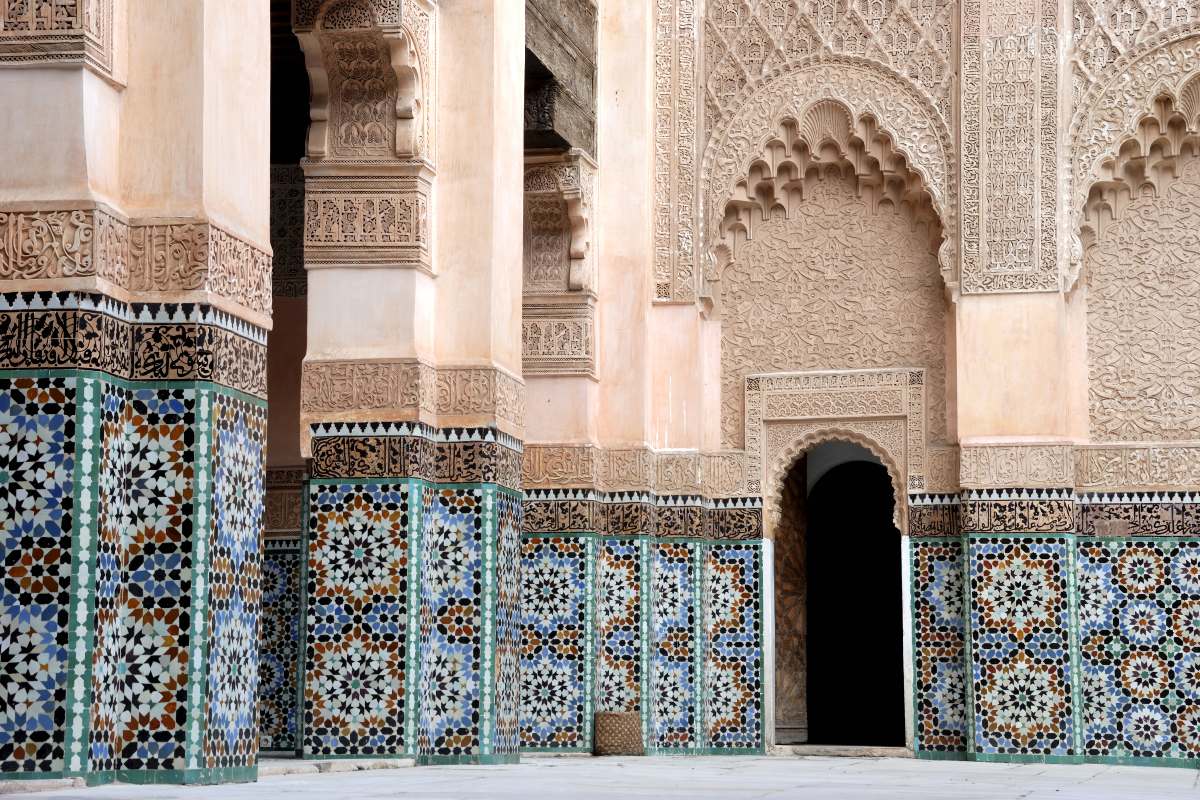
There are places in Morocco where architecture does not simply surround you; it speaks to you. A narrow doorway opens into a quiet riad, sunlight falls across colourful tiles, and carved wooden ceilings reveal the work of artisans who perfected their craft generations ago. This is the beauty of Moroccan architecture: it is decorative, but every detail carries a purpose and a story.
Moroccan architecture has been shaped by centuries of history, bringing together Amazigh traditions, Islamic art, Andalusian influences, and connections with Africa and the Mediterranean. The Almoravids, Almohads, Marinids, Saadians, and Alaouites each left their mark on the country’s cities rather than simply replacing what came before; each period added another layer to Morocco’s architectural identity.
The Medina: Where History Comes Alive
Perhaps nowhere is Moroccan architecture more alive than in the medina. These historic urban centres were not simply residential neighbourhoods. They brought together homes, markets, mosques, fountains, workshops, schools and public spaces, creating entire communities within their beautifully decorated walls.
Walking through a Moroccan medina can feel like stepping into another century. Streets become narrower, colourful souks appear behind old doorways, and an ordinary-looking entrance may suddenly lead into an elaborate courtyard. The Medina of Fez is one of the finest examples, preserving centuries of architecture and craftsmanship within its winding streets.
The Riad: A Hidden World Behind Closed Doors
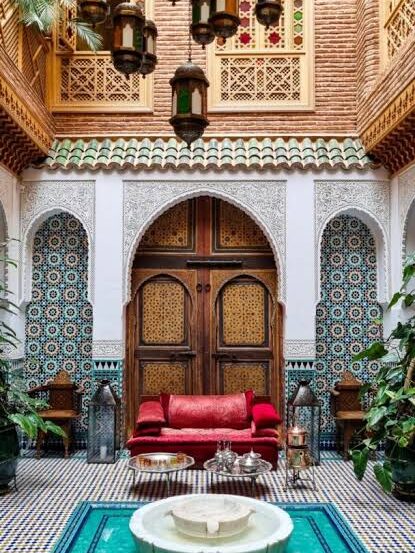
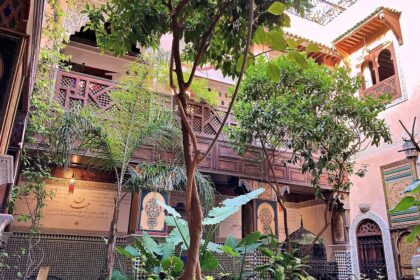
The traditional Moroccan riad is perhaps one of the most beautiful examples of the country’s approach to architecture and modesty. From the outside, a riad may look simple and private, but inside it often opens into a peaceful courtyard surrounded by rooms and galleries.
The courtyard might contain a fountain, plants, or a small pool, with zellige covering the lower walls and carved plaster decorating the spaces above. This inward design was not only beautiful but practical, offering privacy, shade, and a cooler environment. The very word riad comes from the Arabic riyad, meaning gardens. This layout also offered a calm and secluded space for women to exist without the constant male gaze on them.
Zellige: Artful Geometry
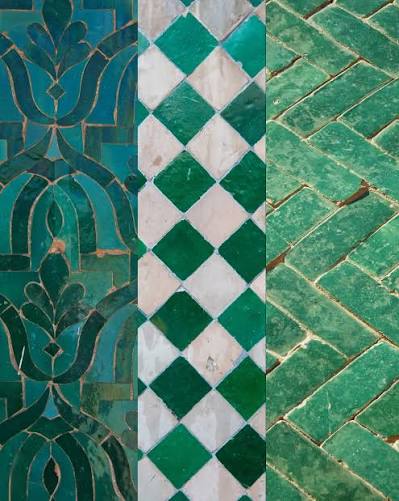
Few things are as immediately recognisable as Moroccan zellige. These small, preciously hand-cut tiles are carefully arranged into intricate geometric patterns covering walls, fountains, floors and columns.
Zellige is much more than decoration. Its complex patterns require precision, patience and generations of craftsmanship. Stars, polygons and repeating shapes come together to create designs that seem almost impossible to construct by hand.
This love of geometry is one of the defining characteristics of Moroccan design. A single tile may seem simple, but hundreds of carefully arranged pieces become something extraordinary and extremely easy on the eyes.
Carved Plaster: Wood and Tadelakt
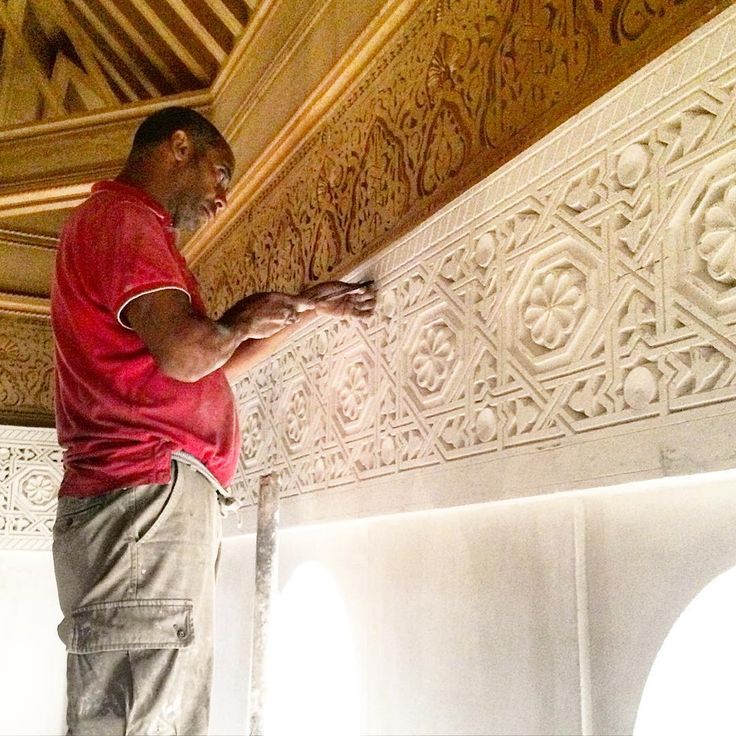
Zellige is only one part of the traditional Moroccan architectural vocabulary. Carved plaster transforms walls into intricate patterns, while cedarwood is often used for beautifully decorated doors, ceilings, and screens.
Another distinctive material is tadelakt, a polished lime plaster traditionally used in places such as hammams and bathrooms. Its smooth surface gives Moroccan interiors a soft, almost sculptural appearance.
Together, these materials create the layered beauty found in Moroccan palaces, riads and historic buildings. Tile meets plaster, plaster meets wood, and light moves across every surface, making the architecture feel almost alive.
The Kasbahs of Southern Morocco
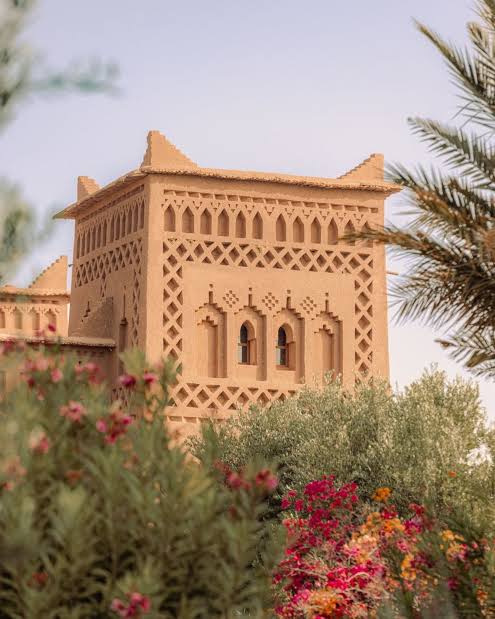
If the architecture of Morocco’s imperial cities is intricate and colourful, the architecture of the south can feel almost like an extension of the landscape itself. Across the valleys and oases are traditional kasbahs and ksour, often built from earth and red mud brick.
One of the most famous examples is Aït Ben Haddou, near Ouarzazate. Its tall earthen buildings, towers, and defensive walls rise from the landscape in shades of red and ochre. The settlement reflects both the environment and the needs of communities that once lived along important trade routes.
Here, architecture demonstrates how closely Moroccan buildings have always been connected to geography. The materials, colours, and forms of traditional buildings often seem to belong naturally to the landscapes around them, which makes it unique to each place in Morocco, reflecting the history and holiness of its grounds.
Intricate Moroccan Doors
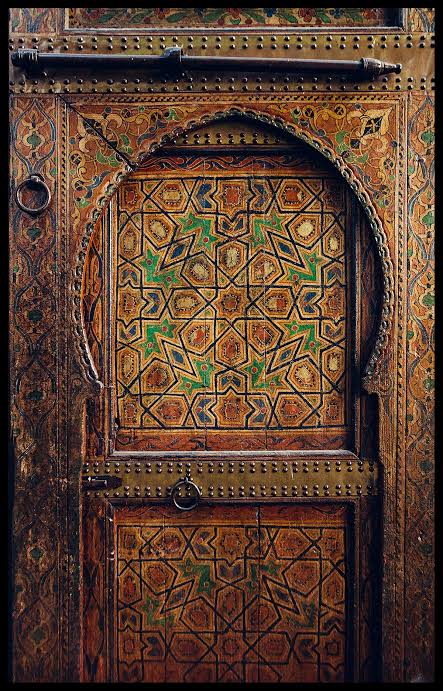
Some of the most memorable details in Moroccan architecture can be found before you even enter a building. Traditional Moroccan doors can feature carved wood, geometric designs, metal studs, unique door knockers, and elaborate brass details.
The same idea appears on a larger scale in the monumental gates of Morocco’s historic cities. Bab Mansour in Meknes, for example, is famous for its enormous scale and elaborate decoration.
These entrances are more than practical openings. They create a transition between spaces, inviting you to leave the busy streets behind and enter somewhere quieter and more…shhh…intimate.
The Personality of Each of Morocco’s Imperial Cities
Morocco’s historic cities each have their own architectural personality. Fez is deeply associated with craftsmanship, scholarship and its extraordinary medieval medina, while Marrakech is known for its ochre walls, palaces, gardens and richly decorated riads.
Meknes has a distinctly imperial character, visible in its monumental gates, walls and royal structures. Rabat, meanwhile, brings together traditional Moroccan architecture with colonial-era and modern buildings, creating a city where different periods of history exist side by side.
Together, these cities show that Moroccan architecture has never been one fixed style. It has continued to change while preserving the traditions that came long before it.
Architecture Shaped by the Climate
Traditional Moroccan architecture is beautiful partly because it was designed for real life. Courtyards provide shade, thick walls protect interiors from heat, and narrow medina streets create cooler passages for pedestrians to move freely throughout their day-to-day life.
In southern Morocco, earthen construction helped buildings adapt to the extreme temperatures of the region. The inward design of riads also created private and sheltered spaces within dense urban environments.
This is one of the most fascinating things about Moroccan architecture: its beauty often comes from practicality. Buildings were not created simply to impress the eye. They were designed to be modest and make everyday life more comfortable, and that practicality became part of their beauty.
Moroccan architecture is a record of Morocco’s history, shaped by dynasties, religion, geography, craftsmanship and everyday life. Every tile, doorway, courtyard and carved wall carries traces of the people who created it. Perhaps that is why Moroccan architecture feels so unforgettable. It does not simply show you Morocco. It invites you to discover it, one doorway, courtyard and hidden detail at a time.