



In Morocco, jewelry has never been just for decoration, but it has also carried silent prayers, protection from outside evil, and brought luck and prosperity. Depending on which region and culture it comes from (i.e., Arab, Amazigh, Muslim, Jewish), the symbolism, material, and the way they are worn differ significantly.
Some are worn around the neck, and some are attached to clothing and carried close to the chest; Morocco´s protective amulets show that behind the beautiful intricate designs, a sense of peace and protection lies underneath it all.
So, here are four of the most interesting amulets used for protection in Morocco:
Khmisa: The Protective Hand of Fatima
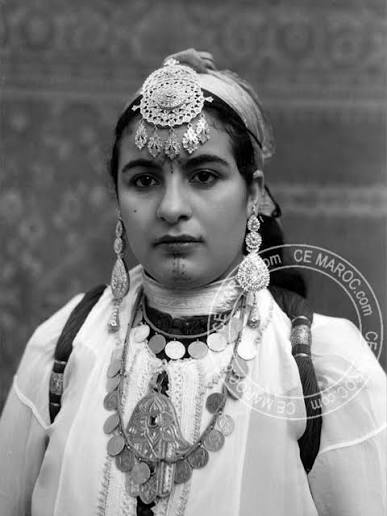
The Khmisa, or “Khamsa,” which means “five,” is Morocco´s most recognized protective symbol worldwide. It was used historically by both Moroccan Muslims and Jews to ward off evil energy and envious gazes.
Why a hand, you ask? Because it symbolizes a barrier between you and the evil eye, acting as a stop sign in a way to protect you. They are usually made from silver and decorated beautifully with enamel, engravings, and natural gemstones.
Currently, you can see the Khmisa symbol everywhere, but it has lost a bit of its original meaning, which historically was much more than just a decorative souvenir.
The Foulet Khmisa: The Twin Sister of Khmisa
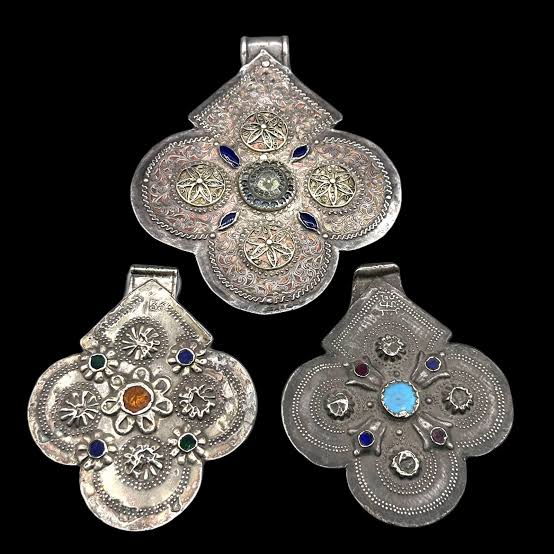
This is also a type of Khmisa, but this design is specific to the Moroccan Amazigh culture, so instead of five fingers, they made it to be five decorative “foulat,” or fava beans that signify fertility, abundance, and good luck.
This Khmisa was worn historically by Amazigh women as pendants of dangly ornaments around the waist, and it consists of four lobed sections that are shaped like the bean clustered around a central stone cabochon style.
Five protective elements that mimic the abstract shape of five fingers, making this Foulet Khmisa a unique twist on the original Khmisa design with added protective benefits.
The Salamander Louha Amulet: Rebirth and Renewal
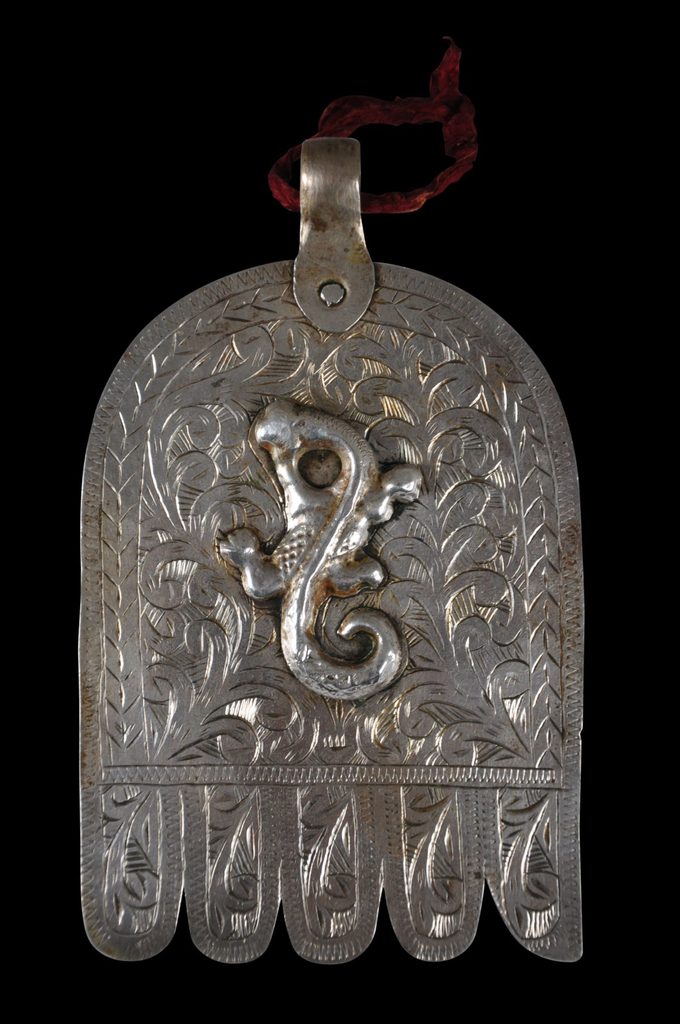
Another beautiful talismanic piece of jewelry is the Moroccan Louha, which means “tablet” in Arabic, and is a powerful pectoral amulet specific to the Amazigh culture.
The tablet is a flat plate of silver in the shape of a traditional writing slate with an arched top that signifies the “Mihrab,” or the architectural top of a mosque, or the magnificent gates of heaven. Typically, the tablet comes engraved with Arabic calligraphy of Quranic protective verses and sacred phrases.
In the center of the tablet, embellishments differ from region to region (Tiznit, Todgha area…), but what makes certain Louhat particularly interesting is the appearance of the salamander. In Moroccan talismanic traditions, the small creature is associated with protection and also immortality.
Because of the salamander´s constant regeneration, it symbolizes life after death and hope at the end of the dark tunnel, making this amulet particularly meaningful during one´s most vulnerable life moments.
Amazigh Fibulae: The Triple Threat
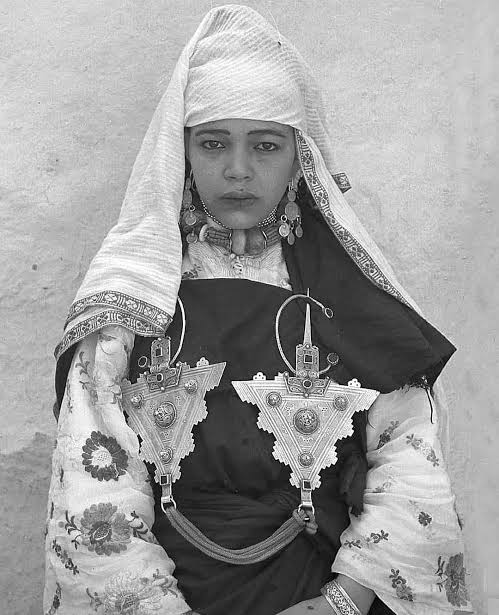
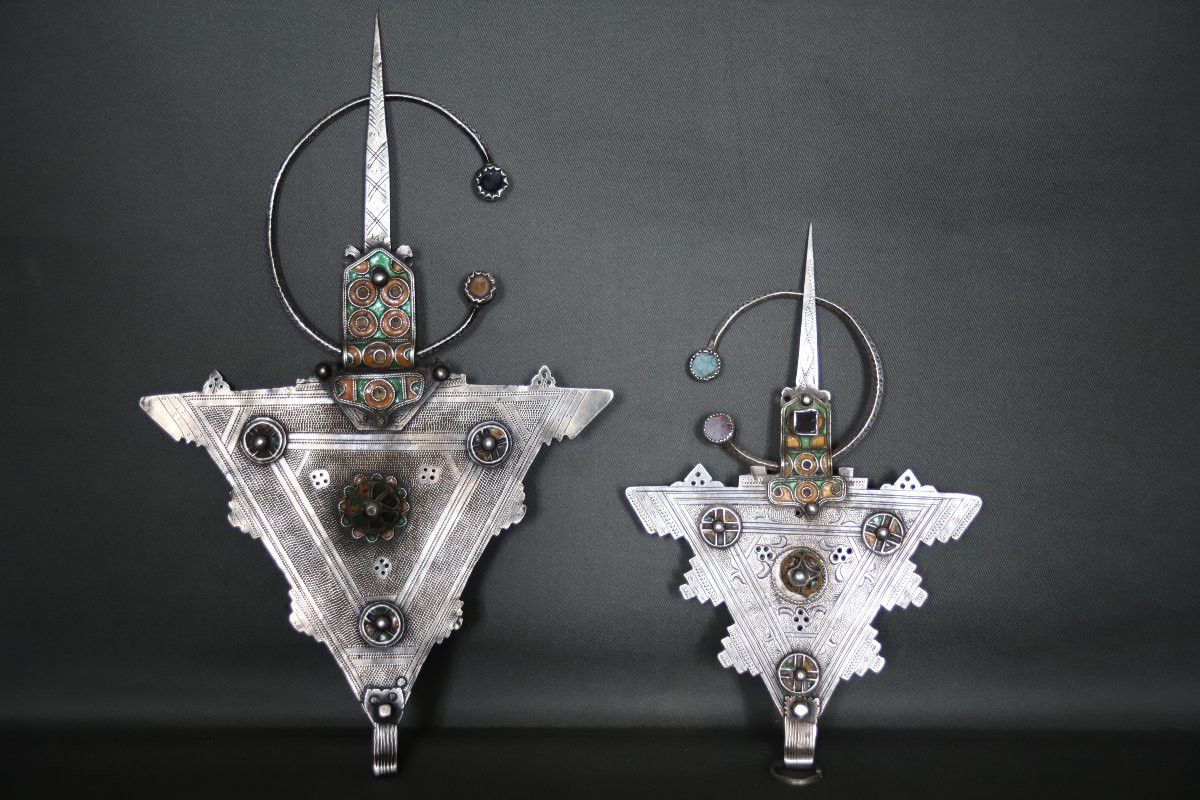
The large silver pins called “Tizerzai” in Amazigh are one of Morocco´s most striking traditional ornaments, used to fasten women´s clothing and act as exquisite jewelry as well.
These pins were not only practical but carry protective meanings due to their elaborate geometric patterns with coral, coins, and enamel details that added symbolism and status to the women of that time.
Distinct shapes and engravings of the pins showcased the wearer´s region and social status, while the triangle geometric shapes served as protective amulets from evil misfortunes and symbolized fertility, vitality, and femininity.
Therefore, this Fibula had several useful purposes: not only did it fasten clothing together, but it also displayed wealth and functioned as a protective talisman- talk about a triple threat.
The Horseshoe: A Charm for Good Luck?
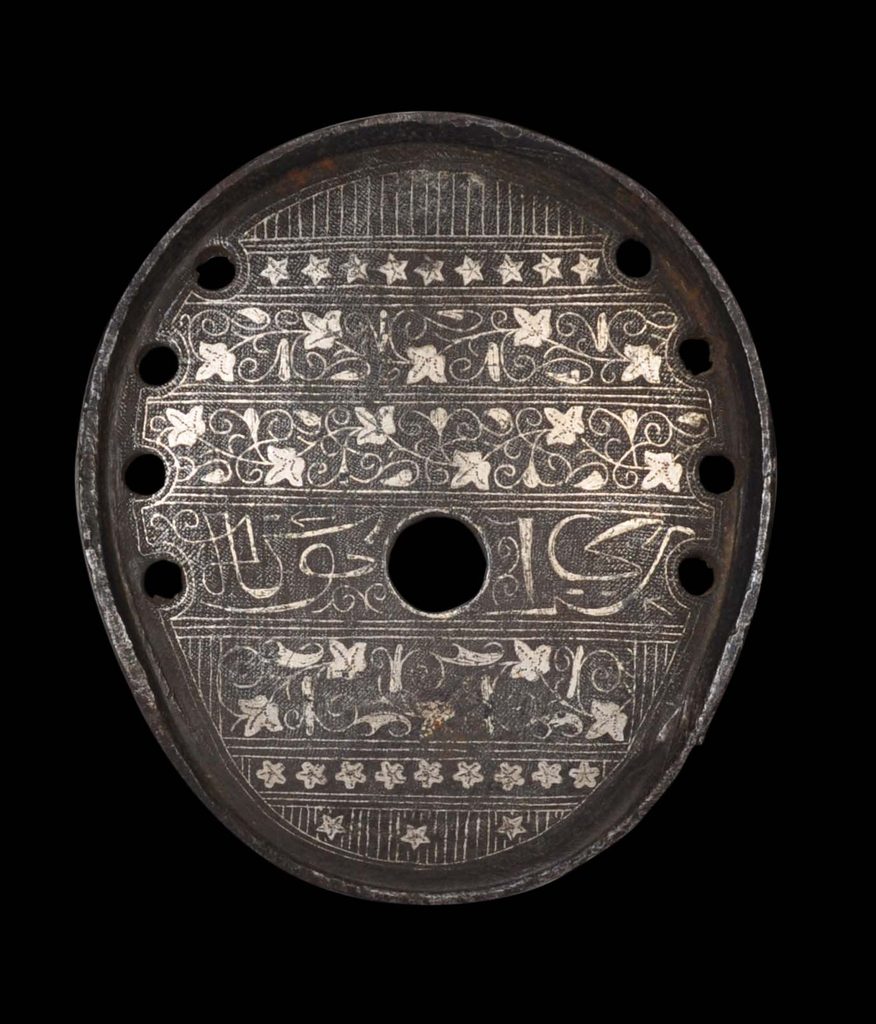
For centuries, the horseshoe has been considered a symbol of luck and protection. In European and Mediterranean folklore, iron was believed to ward off evil spirits, making horseshoes popular charms hung above doorways to protect the home from misfortune.
Some believe the upward-facing ends hold good luck inside, while others see a downward-facing horseshoe as a way of spreading blessings.
Although not uniquely Moroccan, this old charm shares a familiar belief found in Moroccan folklore: that everyday objects can carry the promise of protection and good fortune.
While its place in Moroccan tradition is less documented than the khamsa or Amazigh protective jewelry, the horseshoe reflects a familiar desire to keep misfortune away and invite blessings into the home.
Why Did Moroccans Wear Protective Amulets?
At the heart of each of these amulets, they all deflected the same “evil,” which is the gaze.
It is believed by Moroccans that the gaze can carry more weight than words sometimes, and with one envious look, misfortune and harm can be inflicted if you don´t protect yourself. Therefore, they believe that certain objects can act as physical protection barriers against the invisible evil.
This makes these Moroccan amulets more than just regular accessories; they were never simply objects to be looked at, but objects that were believed in, worn, inherited, protected, and intimate.