



Few events reveal the richness of Moroccan culture quite like a wedding. Moroccan wedding traditions are elaborate, multi-day celebrations layered with symbolism, from protective henna patterns to elaborate caftan changes and rituals passed down for generations. Far from a single ceremony, a traditional Moroccan wedding can stretch across several days, each one built around its own customs, colors, and meaning.
- The Role of the Negafa: Morocco’s Wedding Guardian
- The Henna Night: Beauty, Blessings, and Protection
- The Purification Ritual: The Night of the Bath
- The Wedding Day: Seven Caftans and a Grand Entrance
- Regional Variations: Berber, Arab, and Sahrawi Traditions
- Symbolic Foods and Gifts at a Moroccan Wedding
- Modern Moroccan Weddings: Tradition Meets Today
- Why Moroccan Wedding Traditions Still Matter
In this article, we’ll walk through the key rituals of a Moroccan wedding, what they symbolize, and how regional traditions across the country add their own unique touches to this unforgettable celebration.
The Role of the Negafa: Morocco’s Wedding Guardian
At the center of almost every Moroccan wedding is the negafa, a professional wedding attendant (often a small team of women) responsible for dressing the bride, guiding her through each ritual, and managing the many costume and staging changes throughout the celebration. The negafa is part stylist, part choreographer, and part keeper of tradition, ensuring that every custom is carried out correctly.
Hiring a skilled negafa is considered essential to a proper Moroccan wedding, and many families begin arrangements with one month in advance.
The Henna Night: Beauty, Blessings, and Protection
One of the most anticipated pre-wedding events is the henna night (laylat al-henna), typically held one or two nights before the wedding itself. Female relatives and friends gather around the bride as a professional henna artist applies intricate designs to her hands and feet.
The Symbolism Behind the Designs
Henna patterns in Morocco are far more than decoration. Henna designs can be traced back to early nomadic Berber communities, who used henna at joyous occasions including battle victories, births, weddings, and religious celebrations. Many Moroccans still regard henna as a symbol of good luck, and certain motifs, like the hamsa, an eye, or diamond shapes, are believed to guard against ill fortune and the evil eye.
Common design elements include:
- Floral motifs — representing fertility and happiness
- Geometric patterns — symbolizing unity and protection
- Hidden names — in some traditions, the groom’s name is subtly worked into the pattern
The darker and richer the henna stain turns out, the more luck and blessing it’s believed to bring to the marriage.
The Amariya and the Bride’s Throne
During the henna ceremony, the bride is traditionally seated on an elevated, ornately decorated seat called the Amariya, sometimes carried by attendants like a throne. Surrounded by loved ones singing, dancing, and offering blessings, the bride is very much the guest of honor at her own pre-wedding celebration, a moment of both beauty and community.
The Purification Ritual: The Night of the Bath
In many Moroccan wedding traditions, the bride undergoes a symbolic purification ritual, sometimes called the “night of the bath,” in the days leading up to the wedding. Traditionally accompanied by female relatives, this ritual is followed by singing and celebration, marking the bride’s transition into married life and wishing her happiness in her new union.
The Wedding Day: Seven Caftans and a Grand Entrance
The Seven Traditional Caftan Changes
Perhaps the most visually spectacular element of a Moroccan wedding is the bride’s series of costume changes. Traditionally, brides change into seven different caftans (or takchitas) over the course of the wedding evening, each in a different color and style, often paired with elaborate jewelry, headpieces, and accessories specific to different regions of Morocco. Each outfit change is typically accompanied by music and a grand entrance carried by attendants, giving guests a new spectacle to admire throughout the night.
Music, Ululations, and Rose Water
When the bride and groom make their entrance, they’re often greeted with celebratory chants, high-pitched ululations from the women in attendance, and rose water sprinkled over them as a blessing. Live music, from traditional Andalusian orchestras to modern Moroccan pop, keeps the celebration going late into the night, with guests dancing and singing throughout.
Regional Variations: Berber, Arab, and Sahrawi Traditions
Morocco’s diversity shows up clearly in its weddings. Berber (Amazigh) wedding traditions, particularly in rural and mountain regions, often include distinct group dances, traditional textiles, and community-wide celebrations that can last several days. Arab-influenced urban weddings, meanwhile, tend to center more on the negafa-led caftan ceremony described above. In the Sahrawi south, wedding customs incorporate their own distinct dress, music, and rituals shaped by desert culture. Even Morocco’s historic Jewish communities developed their own version of these traditions, including a version of the henna night held over multiple days.
Symbolic Foods and Gifts at a Moroccan Wedding
Food plays a central symbolic role at Moroccan weddings. Sweet dishes like dates and milk are often offered to the newlyweds as symbols of prosperity and a “sweet” start to married life, while lavish feasts featuring dishes like mechoui (roast lamb), couscous, and Moroccan pastries are served to guests over the course of the celebration. Gift-giving is also common, with families sometimes presenting the couple with trays of gifts, sugar cones, or jewelry as part of the formal proceedings.
Modern Moroccan Weddings: Tradition Meets Today
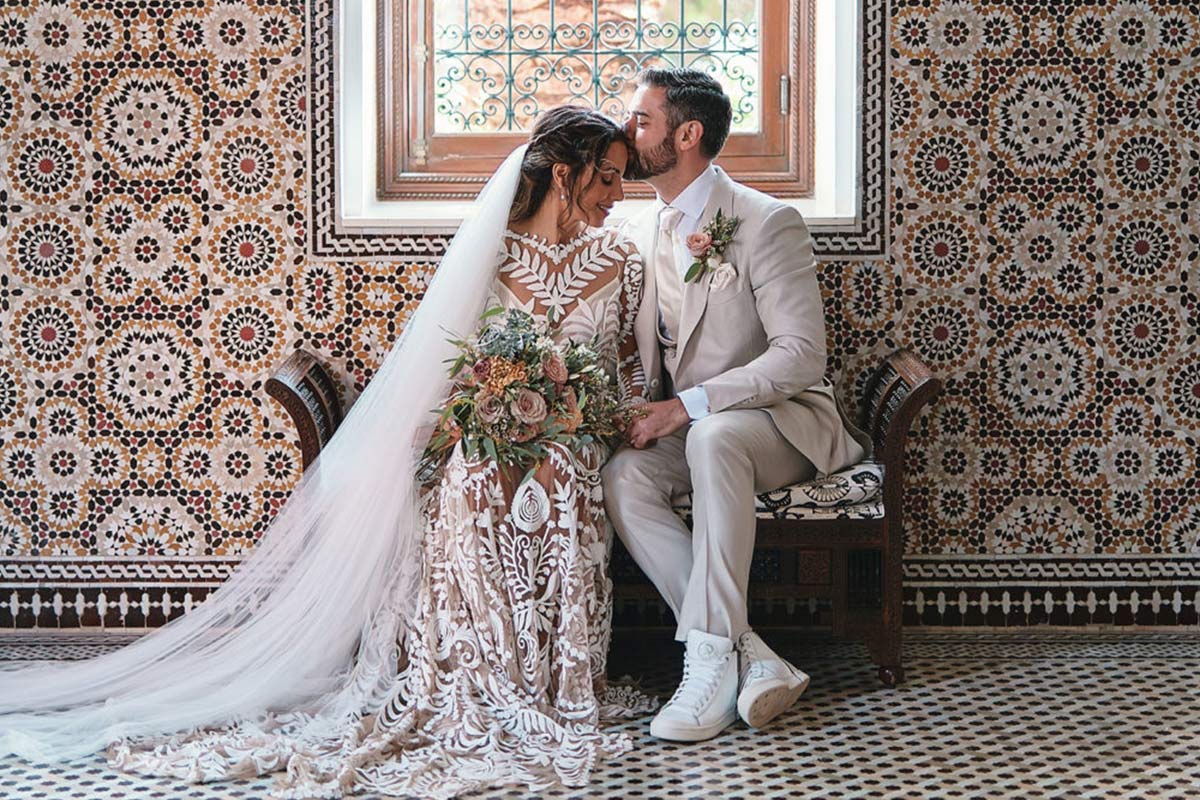
While the core rituals remain deeply respected, modern Moroccan weddings increasingly blend tradition with contemporary touches; Western-style wedding gowns for part of the evening, destination wedding venues, and professional photography and videography have all become common additions. Even so, most Moroccan couples still insist on keeping the henna night, the negafa-led caftan changes, and the traditional blessings intact, a sign of just how important these customs remain across generations.
Why Moroccan Wedding Traditions Still Matter
A Moroccan wedding is never just about the couple — it’s a communal celebration of family, heritage, and identity, expressed through color, music, ritual, and food. For visitors lucky enough to attend one, or even witness a henna night in a medina souk, it’s one of the most vivid windows into Moroccan culture available anywhere in the country.