



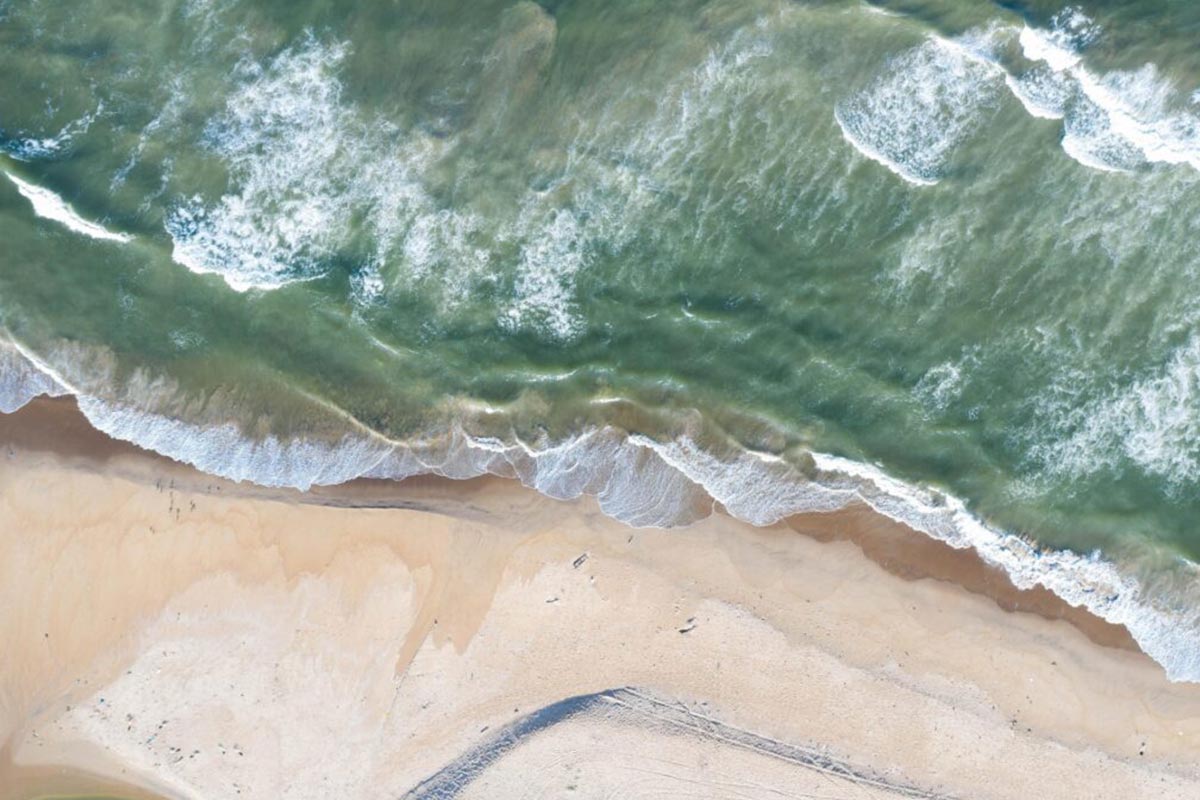
Thinking about a wellness retreat in Dakhla? You are not the only one. More travelers are choosing Dakhla as a wellness destination each year, and it is not hard to see why. A Dakhla wellness retreat gives you something most spa breaks cannot: a landscape that does most of the work for you. Desert silence on one side, the Atlantic Ocean on the other, and a culture of slowing down that has been here long before wellness travel became a trend.
- What Makes Dakhla Different for Wellness Travel
- Yoga in Dakhla: From Side Activity to Real Offering
- The Hammam and Local Beauty Ritual
- The Asmaa Hot Springs: The Wellness Spot Nobody Talks About
- Imlili: Natural Fish Pedicure Pools in the Sahara
- What a Wellness Week in Dakhla Could Look Like
- Flamingos, Wildlife and the Healing Power of Just Watching
- The Digital Detox Factor
- Is Dakhla a Wellness Destination?
- FAQ
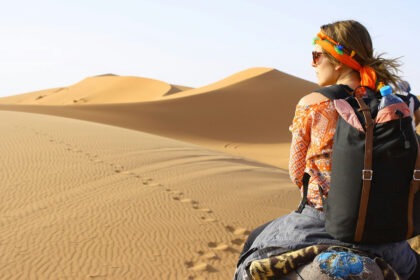
There is a moment most people describe the same way after a few days here. You are sitting somewhere between the desert and the ocean; the Atlantic wind has dropped, and everything goes quiet. No city noise. No crowds. Just sand, water, and sky. That moment is not accidental. It is what Dakhla does.
Wellness travel is one of the fastest-growing areas in tourism right now. According to Research and Markets, the global wellness tourism market is expected to grow from USD 525 billion in 2025 to USD 910 billion by 2030, almost doubling in just five years. Travelers are no longer just looking for a sun lounger. They want to come back home feeling genuinely different. Dakhla, quietly and without much noise, has started offering exactly that.
What Makes Dakhla Different for Wellness Travel
What sets a Dakhla wellness retreat apart from anywhere else is the landscape itself.
The city sits on a narrow peninsula on Morocco’s southern Atlantic coast, surrounded by water on three sides and desert on the fourth. There is no other place in Morocco, and very few places in the world, where you can do yoga at sunrise with the Sahara behind you and the Atlantic in front of you. That geography is not just a backdrop. It is the whole point.
Morocco welcomed a record 19.8 million tourists in 2025, a 14% increase on 2024, and 4.3 million more arrived in just the first quarter of 2026. Within that growth, Morocco’s tourism authorities have specifically pointed to wellness retreats, eco-lodges, and slow travel as areas they want to develop. Dakhla is part of that plan.
Curious about what else Dakhla has to offer? Read our complete Dakhla travel guide before you plan your trip.
Yoga in Dakhla: From Side Activity to Real Offering
A few years ago, if you wanted yoga in Dakhla, you had to bring your own mat and find a quiet spot by the water. That has changed.
Several retreat centers now run structured yoga programs in Dakhla, and the quality has improved noticeably. Here is what you can expect:
- Sunrise and sunset sessions lasting between 45 and 60 minutes, held on wooden decks, pontoons, or sheltered among the dunes depending on the wind
- A range of styles including Gentle Vinyasa, Yin, Hatha, Restorative yoga, aerial yoga, and wheel yoga
- Meditation and breathing work built into most sessions, not just physical practice
- Small groups of two to six people, with private sessions available for couples or families
- Detox retreats that combine fasted morning yoga, healthy local food, hammam days, and massage over five to seven days
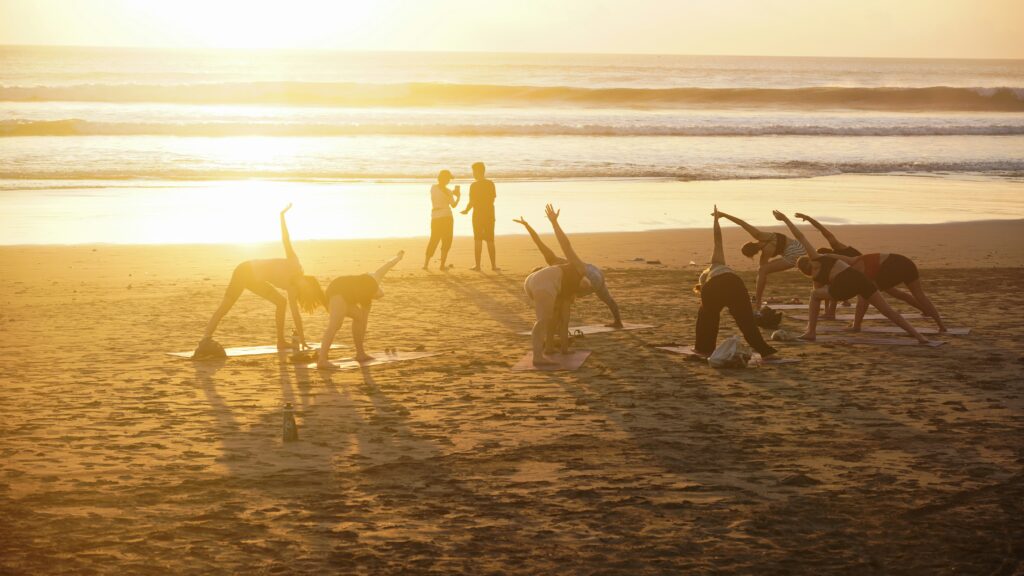
One international visitor described their experience at a lagoon-side yoga center this way:
“I could do yoga morning and evening in a nice studio with good equipment. The teacher was qualified and gave a lot of advice. The lessons were varied and I learned a lot. I also discovered aerial yoga and wheel yoga for the first time. The food was excellent. I recommend it to anyone who wants to relax and do yoga.”
Another retreat guest, a French traveler who visited in May 2025, put it simply:
“I loved the balance between gentle yoga, walks in the dunes, and the hammam. No pressure, just the right setting to slow down. I left feeling lighter, sleeping better, and with a clear head.”
| 🧘 Style | 🌍 Best For | ⏱ Typical Length |
|---|---|---|
| Gentle Vinyasa | Movement and energy | 45 to 60 min |
| Yin | Deep stretch and recovery | 60 min |
| Hatha | Balance and strength | 45 to 60 min |
| Restorative | Rest and nervous system reset | 60 min |
| Aerial Yoga | Flexibility and fun | 60 min |
| Detox Retreat | Full body and mind reset | 5 to 7 days |
The Hammam and Local Beauty Ritual
Wellness in Dakhla is not imported. It has been here for centuries.
The traditional Moroccan hammam is one of the most complete body treatments you can have, and what makes the Dakhla version worth singling out is the use of local, Saharan ingredients that you will not find in a hammam in Marrakech or Fes.
The ritual usually follows this order:
- 🫧 Black soap (savon beldi) is massaged into the skin to soften and prepare it
- 🧤 A kessa glove is used to scrub the body and remove dead skin
- 🌿 Ghassoul clay from the Atlas Mountains is applied as a purifying mask
- 💙 Nila Sahrawiya, a blue indigo powder from Sahrawi tradition, is used to brighten the skin
- 🌿 Argan oil is applied at the end to nourish and seal everything in
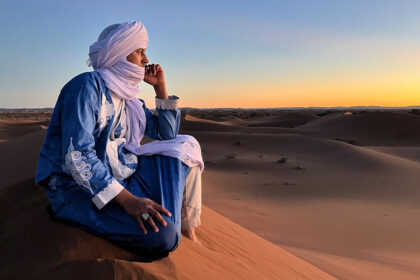
Nila Sahrawiya is the ingredient that sets a Dakhla hammam apart from anywhere else. It is a fine blue-black powder that Sahrawi women have used for generations, originally to protect the skin from the harsh desert sun. One old tradition involved soaking fabric in Nila and wrapping it around the body for days as a treatment. In today’s hammams, it is added at the end of the ritual to leave skin brighter and more even. You will not find this on most Moroccan spa menus.
Worth knowing about: Akker Fassi, a powder made from dried pomegranate rind and poppy petals, used for generations by Moroccan women as a natural lip and cheek tint. Many local hammams in Dakhla carry it, and it is one of the nicest things to bring back home.
The Asmaa Hot Springs: The Wellness Spot Nobody Talks About
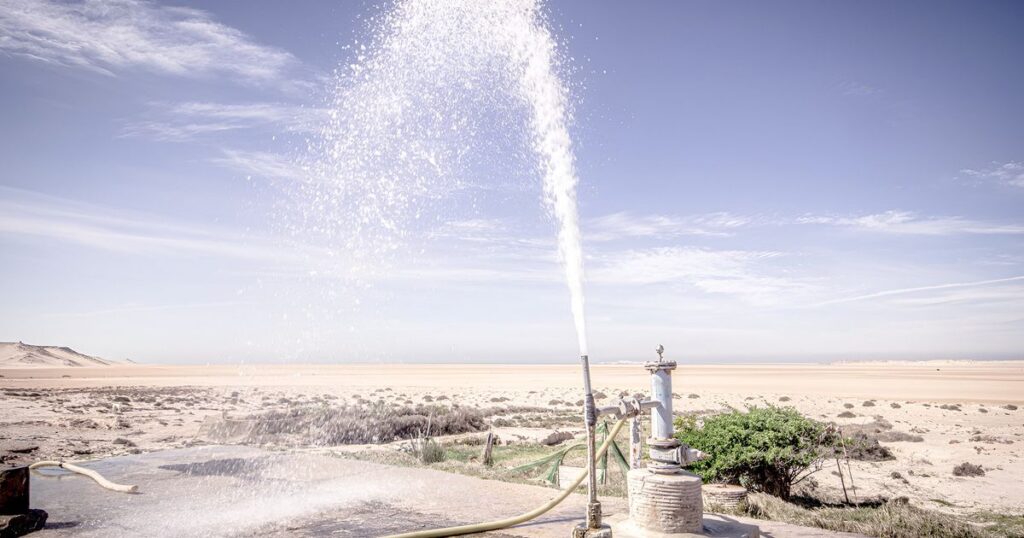
About 35 kilometers from Dakhla, in the middle of the desert, there is a natural thermal spring that most travel guides skip entirely.
The Asmaa hot springs produce warm sulfurous water at around 35 degrees Celsius. The water has a strong smell (think rotten eggs), but it is well known for helping with sore muscles, skin conditions, and even breathing problems. The natural jets of hot water work like a pressure massage, which is why it has become a popular stop for people who have spent a few days kitesurfing and want their body to recover.
It is not a spa. There are no changing rooms or towel service. You drive out into the desert as part of a 4×4 excursion, and you sit in naturally warm water in the middle of nowhere with nothing but sand and sky around you. For most people who do it, that is the best part.
💡 Practical tip: The Asmaa springs are usually included in guided 4×4 desert excursions from Dakhla. Most local tour operators can arrange this. Go in the morning when it is cooler and the light is better.
Imlili: Natural Fish Pedicure Pools in the Sahara
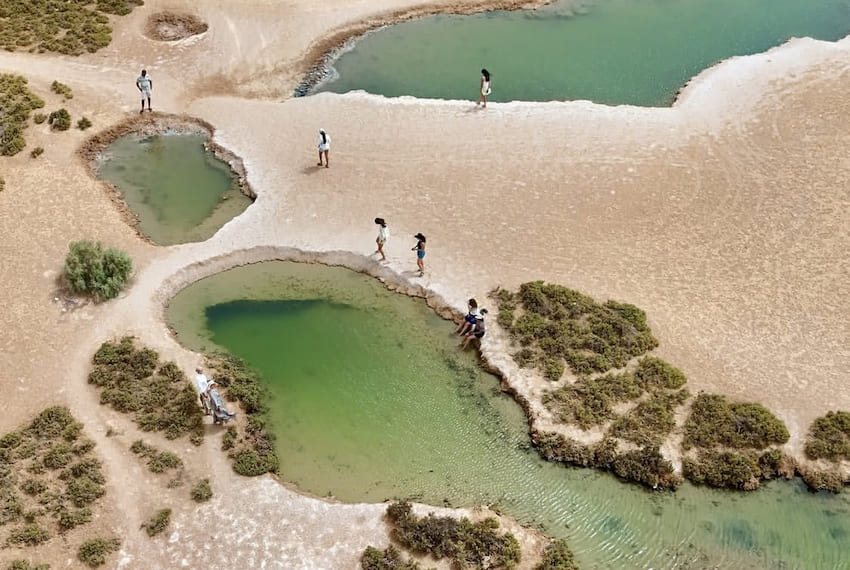
This one surprises almost everyone.
The Imlili wetland sits about 100 kilometers south of Dakhla, a two-hour 4×4 drive through the dunes. When you arrive, you find natural freshwater pools fed by underground springs in the middle of the desert, filled with small fish that gently nibble at your feet. It is a completely natural version of the fish pedicure, in one of the most remote spots in Morocco.
The drive alone is worth it. The combination of the dune landscape, the stillness, and the pools makes this one of the most memorable half-days you can spend in the south of Morocco.
What a Wellness Week in Dakhla Could Look Like
Here is a realistic week that mixes the different things Dakhla offers, without being too rigid about it:
| 📅 Day | 🌅 Morning | ☀️ Afternoon | 🌙 Evening |
|---|---|---|---|
| Day 1 | Arrive and settle in | Lagoon walk, first yoga session | Local dinner, early night |
| Day 2 | Sunrise yoga | Hammam and Nila ritual | Herbal tea, stargazing |
| Day 3 | 4×4 desert excursion | Asmaa hot springs | Campfire dinner in the dunes |
| Day 4 | Meditation by the lagoon | Imlili fish pools | Quiet evening at the property |
| Day 5 | Morning yoga | Oyster farm, fresh seafood lunch | Sunset beach walk |
| Day 6 | Aerial yoga or Yin | Free time at the spa | Sahrawi tea ceremony |
| Day 7 | Slow breakfast, final session | Depart |
Flamingos, Wildlife and the Healing Power of Just Watching
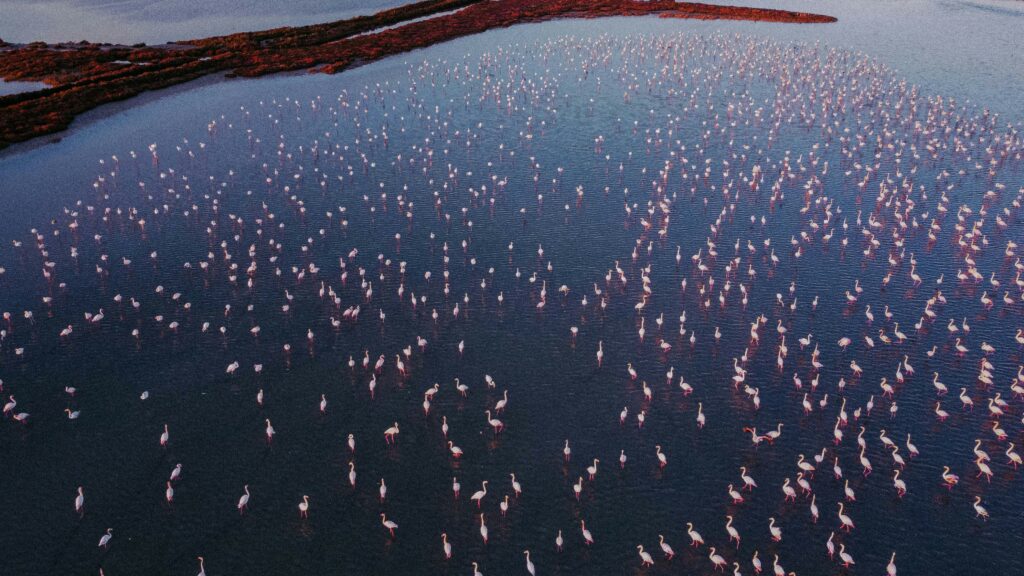
This is one of the quietest wellness experiences Dakhla offers and one of the least talked about.
Between November and March, flamingos gather in the lagoon in large numbers. You can sit on the shore in complete silence and watch them move through the shallow water with the desert behind them and the Atlantic light changing every few minutes. No commentary, no tour guide talking over the moment. Just you, the birds, and the kind of stillness that is genuinely hard to find anywhere in the world.
Wildlife watching as a wellness practice is not a new idea. Spending time in nature, especially with animals in their natural environment, has been shown to lower stress levels, slow the heart rate, and shift the mind out of overthinking mode. Dakhla does this without trying.
Beyond flamingos, the lagoon is also home to:
- 🐬 Dolphins, often spotted on boat tours along the coastline
- 🦢 Herons, spoonbills, and egrets, active in the lagoon year-round
- 🐢 Sea turtles, occasionally visible in the bay
- 🦈 Harmless basking sharks, spotted in the deeper Atlantic waters offshore
The best time for flamingo watching is December to February, which also happens to be the quietest and most affordable time to visit Dakhla. Two good reasons to come in winter instead of peak season.
💡 Practical tip: You do not need a guide to see flamingos. They gather on the lagoon side of the peninsula, visible from the shore. For dolphins and sea turtles, a simple boat tour from any of the local operators will usually do the job.
The Digital Detox Factor
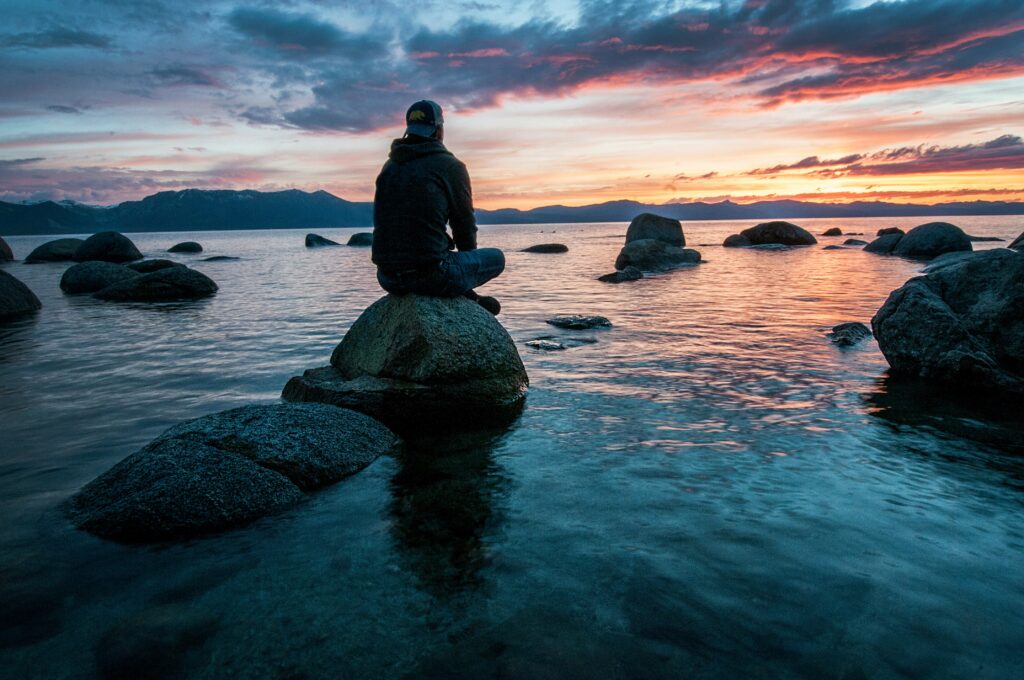
Something happens in Dakhla that is hard to explain but easy to feel. The mobile signal drops as you head into the desert. There are no shopping centers or traffic jams. The wind is loud enough that you cannot really think about notifications. The place pushes you offline whether you planned to disconnect or not.
For a growing number of travelers, this is not an inconvenience. It is the whole reason they came.
Here is what makes Dakhla genuinely good for switching off:
- 📵 Mobile coverage is weak outside the city and almost nonexistent in the desert
- 🏜️ No urban distractions, malls, or tourist traps
- 🌊 The natural environment constantly pulls your attention outward
- 🍃 The Sahrawi culture of sitting, drinking tea slowly, and being present naturally slows your pace
- 🌌 Zero light pollution means the night sky does the rest
Is Dakhla a Wellness Destination?
The honest answer is: it is well on its way, and that is what makes it exciting right now. Whether you come for a day or a week, a Dakhla wellness retreat feels personal in a way that packaged spa breaks simply do not.
The ingredients are genuinely there. Natural thermal springs, a clean lagoon, centuries-old Sahrawi beauty traditions, yoga programs that are getting better every season, exceptional local seafood, complete silence in the desert, and a setting that is unlike anywhere else in Morocco. Travelers who come for a wellness week consistently leave feeling like they found something real.
The growth numbers back it up too. Wellness tourism in Morocco grew by 10% back in 2022, driven by rising interest among international travelers in health-focused trips. That trend has only accelerated since.
What Dakhla does not yet have is the formal infrastructure of an established wellness destination. There is no wellness district, no cluster of internationally certified centers, no marketing campaign positioning it as a health retreat capital. But that gap is exactly what makes the experience feel personal and unpackaged when you get there. You are not being moved through a wellness conveyor belt. You are finding it yourself.
The people arriving in Dakhla today for a yoga retreat or a hammam week are early. In a few years, this will be a much more talked-about destination.
Not sure when to plan your wellness trip to Dakhla? We recently covered everything you need to know about getting to Dakhla from Europe, including which months work best depending on what you want to do when you get there.
For more on what to do once you’re there, the best things to do in Dakhla guide covers the full picture beyond wellness.
FAQ
What is the best time to visit Dakhla for wellness travel? December to February is the quietest and most comfortable period. The weather is mild, flamingos are active in the lagoon, and the desert excursions are easy to do without the heat. Spring (March to May) is also good, though more visitors arrive for the kitesurfing season.
Are there yoga retreats in Dakhla? Yes. Several retreat centers around the lagoon run structured programs ranging from daily drop-in classes to full week-long immersive retreats combining yoga, hammam, desert excursions, and local food.
How do you get to the Asmaa hot springs? They sit about 35 kilometers from Dakhla city. Most local tour operators include them as part of a 4×4 desert excursion. You do not need to arrange it separately.
Is Dakhla good for a digital detox? Very. Mobile signal drops outside the city and is almost nonexistent in the desert. The natural environment and slower local pace naturally encourage you to disconnect without having to try too hard.